
Acute vs. Chronic Pain: Why Your Nervous System Gets Stuck in Pain Loops
This is why you’re stuck in chronic pain
Because your nervous system is overly sensitive and produces pain as a result
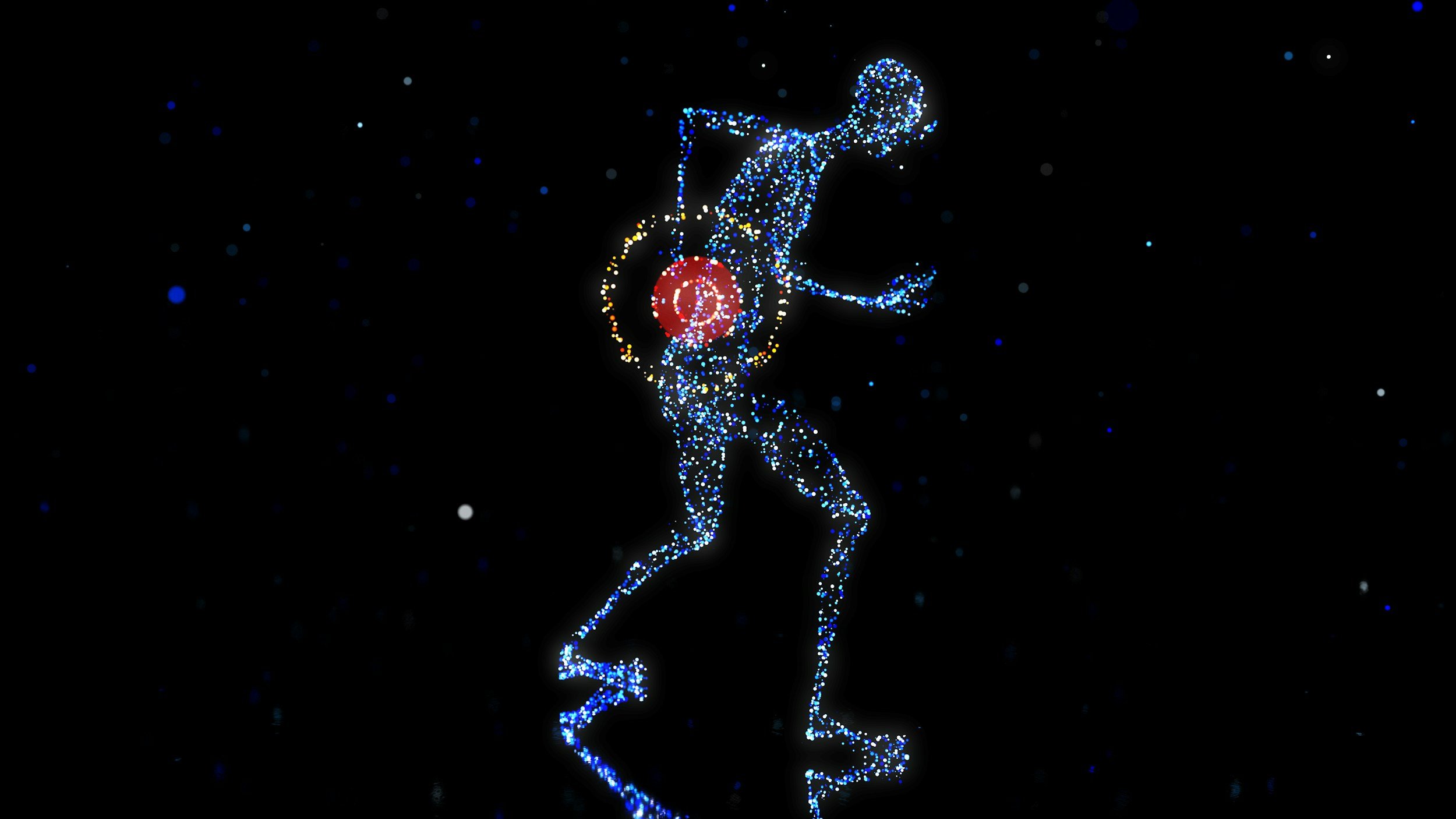
Chronic pain doesn’t have to be your normal. It doesn’t need to debilitate you in your life.
Want to listen along to this blog? Listen to our podcast where we have an episode that talks about everything in this blog, and more. You can listen on your favorite podcast streaming service, or click the link HERE.
Prefer to watch on YouTube? Click HERE to watch!
Follow the Uplift Wellness Pain Podcast for all things pain, injury, anatomy, and rehab on your favorite streaming service!
What Is Pain, Really?
Most people think pain is something that happens to them. A signal coming into the body, like a warning light on a dashboard. But that is not how pain actually works.
Pain is an output from your brain. It is produced when your nervous system decides, based on all available information, that you need to be protected. Your body has nociceptors throughout it that detect potentially harmful stimuli and send that information upward. But your brain makes the final call on whether or not to produce pain, and it makes that call based on your past experiences, your current emotional state, what the situation means to you, and dozens of other inputs happening simultaneously.
Here is a famous example that illustrates this perfectly. A construction worker drove a nail straight through his boot. He was in agony, screaming, and had to be rushed to the hospital. When the boot was removed, the nail had passed cleanly between his toes. No injury. No tissue damage whatsoever. His nervous system assessed the situation as catastrophic danger and produced a pain response to match, not because something was broken, but because the brain decided protection was necessary.
This is not a glitch. This is exactly how pain is supposed to work.
The implication of this is significant. You can have major structural damage on an MRI and feel no pain at all. You can also have zero tissue damage and experience pain that is absolutely debilitating. Pain does not measure damage. It measures perceived threat. And once you understand that, the whole picture of chronic pain starts to make a lot more sense.
Acute Pain: The Alarm Working as Intended
Acute pain is generally defined as pain lasting three to six months or less. It tends to feel sharp, stabbing, throbbing, burning, or tender. In many cases, it is genuinely useful. It tells your nervous system that something needs attention and prompts you to change your behavior.
As noted above, tissue damage is not a requirement for acute pain. The nervous system can produce pain based on perceived threat, even when nothing is structurally compromised. But in cases where tissue damage is present, the acute phase is when the body is actively managing that damage and trying to heal.
The acute phase is the best window to intervene. When pain is addressed early, there is typically less compensatory movement, fewer fear-based associations built around specific activities, less accumulated tissue overload, and a much lower likelihood that the nervous system will become chronically sensitized. Intervening early is almost always faster, simpler, and more effective than waiting.
Unfortunately, most people ignore pain at this stage. They assume it will resolve on its own, decide it is not bad enough to address yet, reach for pain medication to manage symptoms, or avoid the activity that aggravated it and hope for the best. As a general rule, if your pain has not resolved within six to eight weeks on its own, it is unlikely to simply disappear.
Pain is an output. For that output to change, the inputs need to change. Tissue needs to heal. Loading patterns need to improve. Movement quality needs to be restored. And the nervous system needs new, non-threatening information. Avoidance and medication alone rarely provide those inputs in any meaningful way.
Chronic Pain: When the Alarm Gets Stuck On
Chronic pain is typically defined as pain persisting for six months or more. By this point, in most cases, whatever tissue damage originally triggered the problem has already healed. So the question becomes: why is the brain still producing pain when the threat is gone?
This is where things get complicated, and where a lot of conventional care falls short. Research consistently shows that chronic pain is a biopsychosocial phenomenon, meaning biological, psychological, and social factors all feed into the experience simultaneously. The longer pain persists, the more deeply these factors become interwoven, and the harder they are to tease apart.
There are several key mechanisms worth understanding. They all relate to and reinforce each other, but breaking them down individually makes them easier to digest.
Central Sensitization and Cortical Inhibition
As pain persists over time, your brain undergoes real, measurable neurological changes. The map your brain uses to represent your body becomes blurred and less precise. Overlapping and referral pain patterns develop. Proprioception, your sense of where your body is in space and how it is moving, begins to degrade.
Most significantly, your nervous system becomes centrally sensitized. This means it starts producing pain responses to stimuli that are not actually harmful. Light touch, gentle movement, or ordinary daily activities that should feel completely safe can trigger a significant pain response. This is not imagined and it is not an exaggeration. It is a real, documented neurological process in which the threat threshold has been lowered to the point where almost anything crosses it.
Desensitizing a centrally sensitized nervous system takes time, and the process is not linear. There will be better weeks and harder weeks. Understanding this upfront matters, because a difficult few days in the middle of the process can feel like evidence that nothing is working, when in reality it is just part of how nervous system retraining unfolds.
Fear Avoidance of Movement
As pain becomes associated with specific movements or activities, avoiding those movements feels like the rational and safe response. And it is often reinforced by well-meaning clinicians who say things like, "If you do that, you will make it worse," or, "Avoid that movement at all costs." That advice, however well-intentioned, tends to create a much larger problem than the one it is trying to solve.
Here is what actually happens. You have been avoiding bending forward to pick something up. One day you try it, moving carefully and slowly, but your nervous system is on high alert. As you start to stand back up, pain fires. You picked up a pen. Nothing tore. Nothing structurally changed. But your brain had already linked that movement, the anticipation of threat, and the pain response into a single package, and it delivered that package right on cue.
The result is that you become more sensitized, more avoidant, and your tissues progressively lose tolerance for the very movement you need to rebuild. The cycle does not just maintain itself. It deepens.
Tissue Tolerance and Tissue Changes
Your tissues are adaptive structures. Load them appropriately over time and your body responds by laying down more tissue, improving motor unit recruitment, and increasing neuromuscular coordination. Remove load from a structure and it atrophies. Tendons lose stiffness. Ligaments weaken. Muscles lose both mass and the neural recruitment patterns needed for effective force production.
This is the double-edged reality of tissue adaptation in chronic pain. Pain causes people to offload and avoid. Offloading causes tissues to lose capacity. Reduced capacity lowers the threshold at which pain is produced. The cycle deepens not just neurologically through sensitization, but structurally through actual changes to tissue quality and tolerance.
The inverse problem also exists. Too much load applied too quickly, or transmitted through dysfunctional movement patterns, can drive microtrauma into structures like tendons. Over time this leads to degenerative tissue changes that reduce the structure's ability to handle force effectively, creating a different but equally real problem on the other end of the spectrum.
Dysfunctional Movement Patterns
There are two ways to think about functional movement, and both matter.
The first is contextual. What is functional for a Major League Baseball pitcher is entirely different from what is functional for a grandmother who wants to play on the floor with her grandchildren. Goals and context must define the target. There is no universal standard for what good movement looks like outside of the demands of the individual in front of you.
The second is biomechanical. Is the tissue performing its intended anatomical role? Is force being transmitted and buffered efficiently through the kinetic chain, or are certain structures being overloaded because something upstream or downstream is failing to do its job? Is the pitcher tearing his UCL because he is "throwing too hard at the elbow," or because a breakdown somewhere else in the chain is concentrating excessive force at that joint? Is the grandmother getting a disc herniation because she lacks the intrinsic core stability to control her descent to the floor?
When pain changes how a person moves, those compensatory patterns get wired in. What begins as an emergency adaptation becomes the default motor program. The nervous system learns to organize movement around pain avoidance rather than around efficient mechanics. Restoring proper movement requires identifying what those compensatory patterns are, understanding why they developed, and systematically replacing them with better options.
The Bigger Picture
As pain becomes chronic, all of these mechanisms operate simultaneously and feed into each other. Central sensitization drives fear avoidance. Fear avoidance reduces tissue tolerance. Reduced tissue tolerance reinforces dysfunctional movement. Dysfunctional movement patterns perpetuate sensitization. And layered on top of all of it are additional contributors: emotional trauma, financial stress from lost work capacity, the psychological damage of being dismissed or told the pain is not real, systemic inflammation from poor sleep and nutrition, and more.
This is not a simple problem, and it does not respond well to simple or generic treatment.
What You Can Actually Do About It
The good news is that the nervous system is plastic. It learned these pain patterns, and with the right inputs, it can learn new ones. The path forward requires precision, consistency, and a willingness to progress through discomfort without pushing into harm.
Step one is reducing pain and restoring a sense of safety. Using manual therapy, breathing-based nervous system regulation, and targeted soft tissue work, the goal is to bring the threat level down, restore range of motion, and begin reintroducing movement in controlled, non-threatening ways. This is not about eliminating all discomfort. It is about building a foundation the nervous system trusts enough to work from.
Step two is rebuilding movement patterns. Once the nervous system feels safer, the work shifts to correcting the dysfunctional patterns identified through assessment. This includes addressing regional interdependence, the clinical principle that the source of pain is frequently not where the pain is actually felt, as well as restoring proper joint centration, load sharing across the kinetic chain, and coordination between movement subsystems.
Step three is building strength. Strength is not a fitness goal. It is a clinical outcome. Stronger tissues are more resilient tissues. Better motor control means less compensatory movement and a lower likelihood of reinjury. Progressive strength training restores tissue tolerance, improves proprioception, and gives the nervous system consistent, repeated evidence that the body is capable and safe to use. This is not optional in a full recovery. It is the endpoint the whole process is building toward.
Why the Acute Phase Matters So Much
Addressing pain early is always easier than addressing it after years of compensatory movement, central sensitization, and fear avoidance have become deeply ingrained. At Uplift, most clients arrive in the chronic pain phase, often after years of unsuccessful treatment through the conventional insurance-based model. Many have been seen for fifteen minutes at a time, given the same generic exercise program as everyone else with the same diagnosis code, and told to stop doing the things that matter most to them.
If you are reading this and your pain is still in the early stages, do not wait. The best time to intervene is now, before the nervous system has had time to reorganize around pain as its default state.
And if you have already been living with chronic pain for months or years, that does not mean nothing can be done. It means the process requires more time, more precision, and a practitioner who is willing to actually investigate the root cause rather than chase symptoms from one appointment to the next.
People do get out of chronic pain. They return to the activities they were told to give up. They stop feeling fragile and start feeling capable again. That outcome is not guaranteed, and it is not fast. But it is far more possible than the conventional model tends to suggest.
Ready to Understand What Is Actually Going On?
No matter where you are in your pain experience, there is a path forward.
The first step is a free intro call. On that call, we will learn about what you are dealing with, walk you through how we work with people in similar situations, and figure out together whether we are a good fit. If we are, we will get you scheduled for a thorough 90-minute evaluation where we actually dig into what is driving your pain, not just where it hurts.
As a reader of this blog, you get $100 off our 90-Minute Deep Dive Evaluation when you book your intro call.
About the Author
Mike is a Licensed Massage Therapist, movement specialist, and strength coach serving the Hudson Valley. He helps clients move beyond pain through personalized, root-cause-focused care combining manual therapy, NKT, and strength training.
Serving Kingston, Saugerties, Rhinebeck, Red Hook, Woodstock, Catskill & Poughkeepsie in the Hudson Valley.
Stay Connected. Keep Progressing.
Get expert tips on movement, strength, recovery, and pain relief straight to your inbox.
Short, practical insights designed to help you feel better between sessions.
⬇︎ Sign Up for the Newsletter below